Sensors & outputs Pressure
Fuel pressure
0–5 V fuel transducer · sensor · Pressure
Same electrical family as oil pressure. Default Analog Volt 3. Reference the regulator to MAP; the ECU then sees gauge pressure that tracks boost.
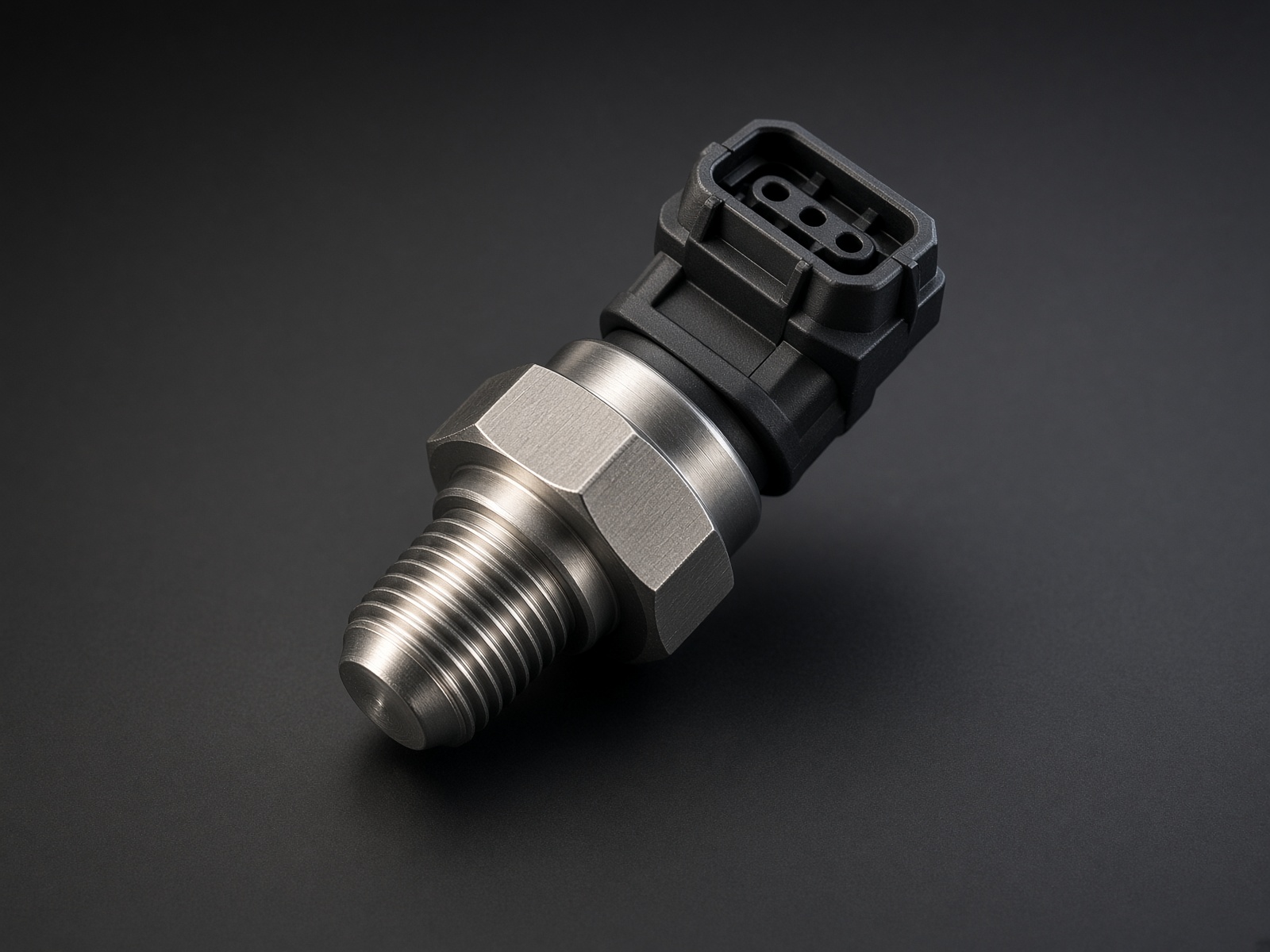
Typical parts: AEM 30-2130-150; Honeywell / SSI 0–10 bar; GM fuel-rail 0–5 V
Device pinout
Looking into the sensor, locking tab at the top. Same meter rule as oil pressure.
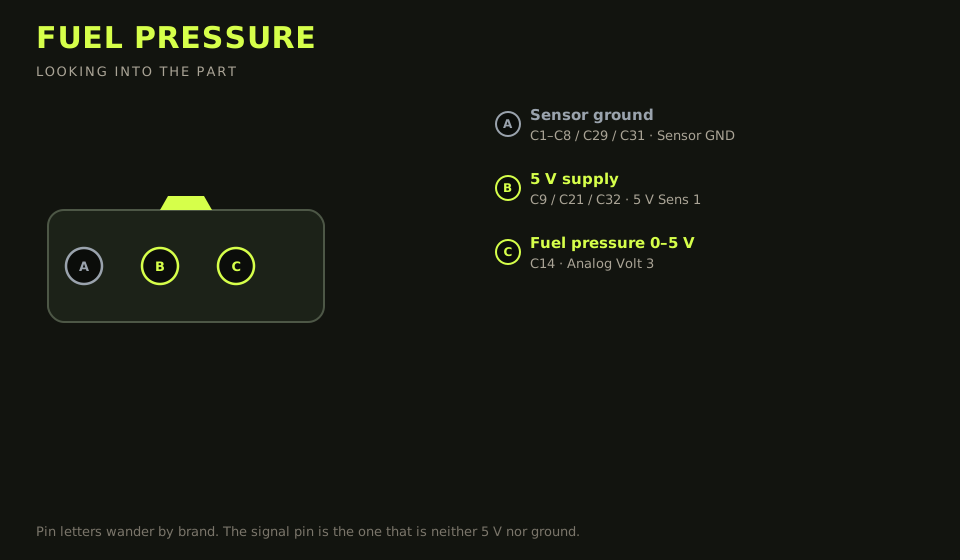
- Connector: 3-way on the transducer
- Layout (looking into the part): A · B · C; polarising key top
| Device pin | Function | Type | Race Core | TunerStudio |
|---|---|---|---|---|
| A | Sensor ground | Ground | C1–C8 / C29 / C31 | Sensor GND |
| B | 5 V supply | 5 V | C9 / C21 / C32 | 5 V Sens 1 |
| C | Fuel-pressure signal | Signal | C14 | Analog Volt 3 |
Wiring notes
- Pin letters wander between brands. Meter 5 V and ground key-on. Signal is the remaining pin.
- A 0–10 bar (0–150 psi) sender is the usual EFI range. A 0–3 bar MAP is not a fuel-pressure sensor.
- Mount on a fuel-safe adapter, not a dry MAP hose. E85 eats the wrong elastomer.
Failure modes
- Fuel pressure rises 1:1 with boost and the regulator is manifold-referenced: that is gauge behaviour, and it is what the ECU should see. A flat line under boost means the reference hose is off, or the sensor is absolute and the calibration ignores MAP.
- Reading sits at 0 V or 5 V: pin letters were copied from a different brand. Meter 5 V and ground again.
- E85 weeps at the adapter: the elastomer is not fuel-safe.